The history
Where fado began: Mouraria and Alfama
How fado grew in Lisbon's old streets, why the tavern and the casa de fado matter, and where in the city to hear it today.
Reserve a seat for fado ↗Quick answer
Fado grew up in nineteenth-century Lisbon, and Lonely Planet places its birth in the tascas of Mouraria. Over the twentieth century it moved into licensed casas de fado, and today it is heard in fado houses, concert halls, neighbourhood associations and a theatre show in Chiado. The Museu do Fado in Alfama tells the story.
A song of the old streets
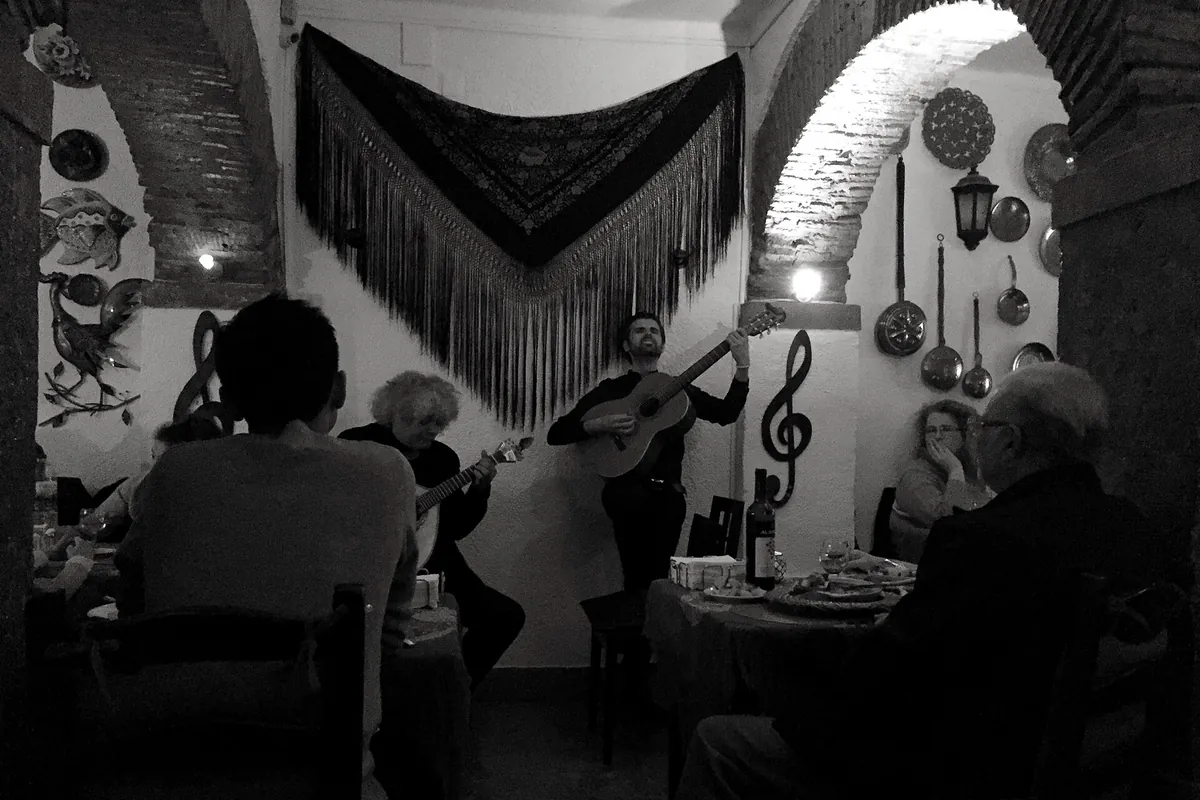
Lonely Planet writes that fado was born in the 1800s in disreputable tascas in the heart of Mouraria, among sailors on shore leave, farmers and other working people, who purged their troubles through improvised songs. Wikipedia traces it to the 1820s. UNESCO adds that it is widely practised by communities in Lisbon and traces its mix of influences, from Afro-Brazilian song to rural traditions.
From tavern to casa de fado
The end of the nineteenth century pushed the genre into something more polished, with the Portuguese guitar established as its default instrument. Lonely Planet says growth into mainstream status was steady until censorship after the 1926 military coup, which developed into a dictatorship. Fado lost its improvised character and became a fully professional affair, performed in new licensed establishments called casas de fado. That history is why a fado dinner feels the way it does today: a professional line-up, a set order of songs and a room built around the performance rather than the other way round.
Three Fs and a long pause
Lonely Planet's writer recalls that Fátima, football and fado were the only government-sanctioned sources of culture in the decades after the 1926 coup, and that fado had become a propaganda tool for some listeners. It never disappeared, though. After the 1974 Carnation Revolution the form slowly regained ground, and in the 1990s a new generation of fadistas revived it, keeping it traditional while pushing boundaries.
Fado in the neighbourhoods
UNESCO notes that professionals sing fado on concert stages and in small fado houses, while amateurs sing it in many grass-roots associations in Lisbon's older neighbourhoods. Informal tuition passes from older, respected exponents to the young, often within families. Fado is therefore not only a stage show: it also lives in neighbourhood associations, where amateurs sing for each other.
The Museu do Fado
The Museu do Fado stands in Alfama, in a former water pumping station whose construction began in 1868, according to Wikipedia. Its permanent exhibition shows artworks related to fado, including the painting O Fado by José Malhoa, and objects from fado's history, including sheet music and videos. Since 2016 its website has hosted a sound archive of thousands of recordings that go back to the start of the 1900s. Opening hours and tickets are on the museum's website. A visit works well on a different day from a show, when you have the time to listen to the recordings properly.
Ways to hear fado today
Lonely Planet's writer lists fado houses in Alfama, concert series in unusual venues, a garden concert at the Amália Rodrigues house museum, and a street festival in Alfama. A short seated show in Chiado is another option. Choose by what you value: a long dinner, a small room, a concert or an hour. Whichever you pick, the etiquette is the same: stay quiet while the song is sung, and applaud at the end. Lonely Planet cautions that some once-reputable venues have become overpriced tourist traps, so read recent reviews before you book anywhere that sells fado with dinner.
Read next: Fado in Chiado show: what to book
Frequently asked questions
Where was fado born?
In nineteenth-century Lisbon. Lonely Planet places its birth in the tascas of Mouraria. Wikipedia traces it to the 1820s.
What is a casa de fado?
A restaurant or venue that combines fado performance with dinner. They became licensed establishments in the twentieth century, according to Lonely Planet.
Is there a fado museum?
Yes. The Museu do Fado is in Alfama, in a former water pumping station. It shows artworks and objects from fado history and hosts a digital sound archive.
Sources